Where Did Handbags Come From? A 700-Year History of the Evening Bag
The History of Handbags: From Victorian Evening Bags to the 1930s Minaudière
Where did handbags come from? Ask most people and they'll guess the answer is recent — but the history of handbags actually stretches back more than 700 years. And surprisingly, the everyday "everywhere" bag you carry now began as an evening bag.
The Origin of Handbags: Victorian Carryalls and Smelling Salts
The earliest evening bag history begins in the Victorian era, when women carried small pouches for handkerchiefs and smelling salts. Empress Josephine, wife of Napoleon, favored tiny handbags and helped spread the trend through the court and into the countryside. After a quieter period, the vintage evening bag returned after World War II as a must-have for upper-class women dining out — often made from organic glass, phenolic resin, silk, or brocade.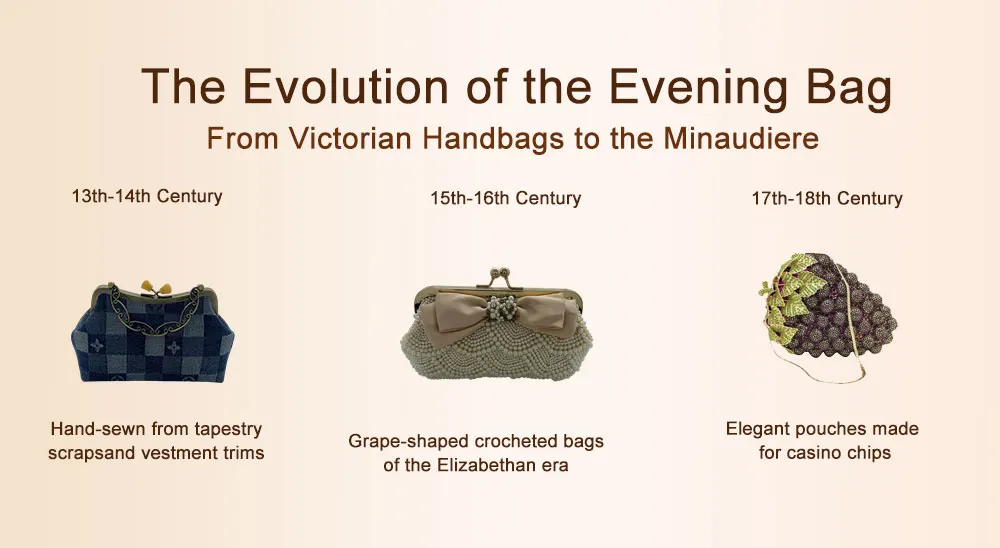
Evening Bag History Goes Back Further Than You Think
Long before that, in the 13th and 14th centuries, ladies crafted evening bags by hand from scraps of wall hangings, adding embroidery and ornaments taken from religious vestments. By the 15th and 16th centuries, during Queen Elizabeth's reign, these handbags evolved into fanciful shapes like grapes and frogs, strung with hooked flowers.
From Casino Pouches to Dress Accessories
In the 17th and 18th centuries, a Europe-wide card game craze gave birth to a stylish casino handbag designed to carry chips. The 19th century then gave the handbag modern meaning: it became an accessory to match clothing and to show off needlework and taste. As railways reshaped daily life, these vintage handbags were passed down, still handmade, often carrying the owner's name in paint or thread.
The Birth of the Minaudière in 1930s Handbag History
The Depression year of 1930 also marked a turning point in handbag history: the evening bag gained a new name — the Minaudière. Created by Van Cleef & Arpels and inspired by arts patron Florence Gould's habit of carrying her things in a Lucky Strike cigarette case, the gold-and-silver decorated case became a favorite of film stars and socialites. Rivals Tiffany & Co., Cartier and Chaumet joined in, until Bottega Veneta innovated by replacing precious metal with leather.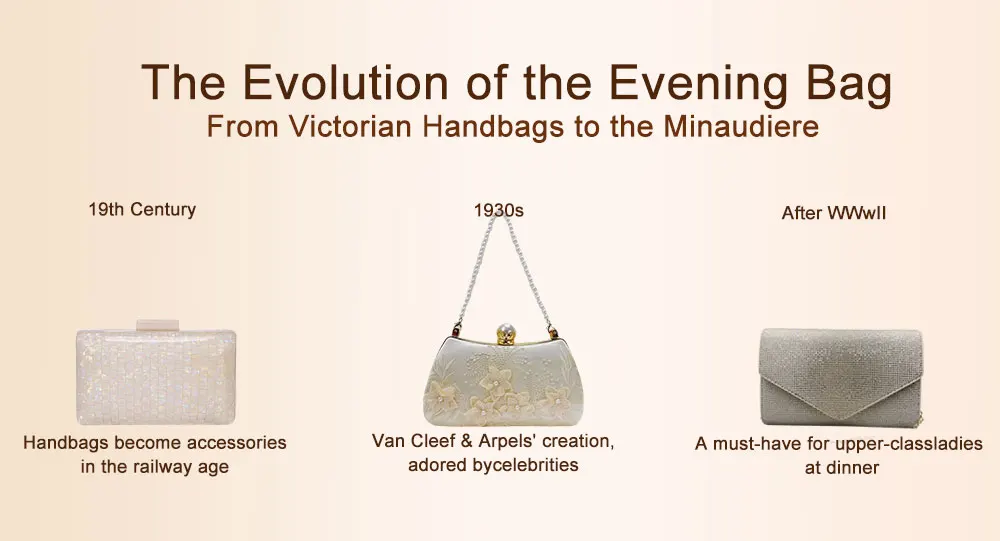
The Takeaway
Every evening bag and luxury handbag you see on the market today took its shape around the 1930s — a legacy that traces all the way back to the very first Victorian handbags.